What actually lives in our van: the kit that earns its space
Three summers and about 40,000 km on, here is what stayed in the van, what got thrown out, and the two pieces of paper that campsites and police actually ask for.


A panel van has roughly six square metres of floor. Everything we own on the road has to justify a share of it, and after three summers of full-time travel the list has become short and boring. That is a compliment. Here is the honest version: the power, water, cooking and safety kit that stayed, the gadgets that went, and the gas and roadside rules that changed while we were driving.
Power: 12 volts and nothing clever
Our electrical system is a 200 Ah lithium battery, a 300 W panel on the roof and a 30 A DC-DC charger that tops the battery up from the alternator while we drive. That has kept a compressor fridge, two laptops, lights and a water pump running through a grey week in Galicia without a hookup. The lesson we paid for early was to keep the whole van on 12 V. The 1000 W inverter from year one now charges a laptop once a fortnight. The electric kettle it was bought for went to a charity shop in Porto, because ten minutes of kettle used more energy than a full day of everything else.
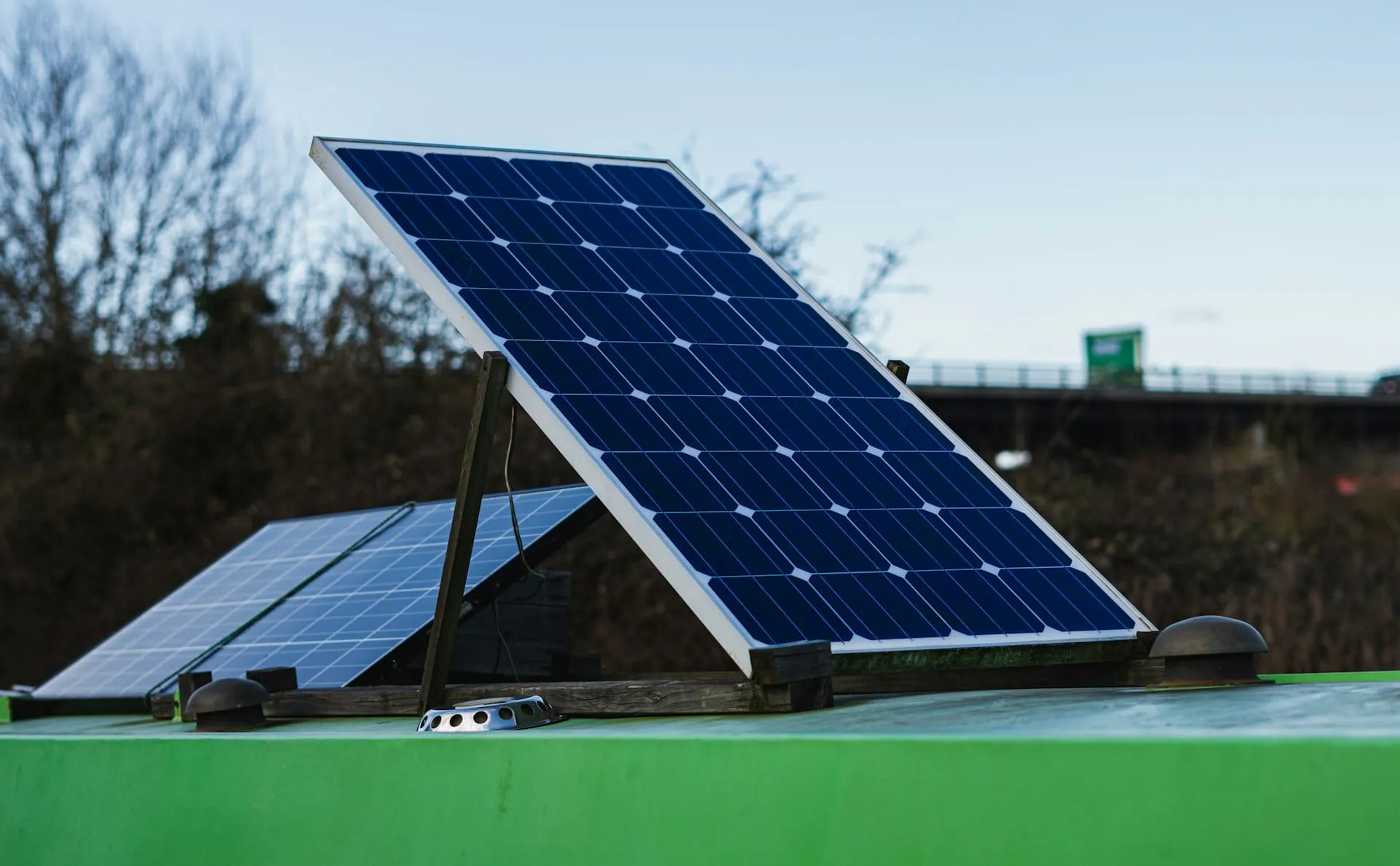
What earned its space: a battery monitor with a shunt, so we know real amp-hours rather than a guess from voltage, and a 10 m mains cable with a CEE adapter for the rare campsite night. What did not: a second power station, a 12 V hairdryer, and the folding 100 W suitcase panel we set up exactly twice.
Water and cooking: less tank, more refills
We carry 60 litres of fresh water under the bed and a 10 litre jerrycan we can walk to a tap with. Two people wash, cook and drink on roughly 12 to 15 litres a day, so the tank lasts four or five days and the jerrycan means we never drive around nearly empty hunting for a service point. A ceramic gravity filter deals with the taste of campsite water; we stopped buying bottled water in the second summer.
Cooking runs on a two-burner gas hob fed by one 11 kg cylinder, which lasts six to eight weeks of daily use. Gas is what kept the electrical system small, a trade-off most people underestimate. Cylinder fittings differ between countries, so the two adapter sets sold in camping shops (one to refill, one to connect local bottles) live in the gas locker permanently. A cast-iron pan, one big pot, a moka pot and a small board cover every meal. The oven box that sits over a burner was used once, for a birthday cake that did not rise.

Safety: the kit that is checked, and the kit that saves you
Two documents now matter more than any gadget. The first is the gas system inspection certificate. In Germany the G 607 check became legally mandatory for every leisure vehicle with a liquid gas installation on 19 June 2025. It has to be repeated every two years and costs between 40 and 80 euro at an ADAC test centre or an approved inspector; without a valid certificate you may not run the gas system at all. Switzerland has required a gas check every three years since December 2017, and Swiss campsites can ask for the sticker at check-in. A self-built van is not exempt, so we had ours tested before the season and keep the certificate with the registration papers.
Mandatory roadside kit for a foreign-registered van (2026)
- Warning triangle
- Required in France, Italy, Austria, Belgium, Croatia and SloveniaSpain accepts your home-country triangles; the connected V-16 beacon is compulsory only for Spanish-registered vehicles since 1 January 2026
- Hi-vis vest
- One per person who steps onto the road in France, Italy, Spain and PortugalAustria, Belgium and Slovenia require the driver to wear one when leaving the vehicle on a motorway or expressway
- First-aid kit
- Required in Austria (in a dust-proof box) and CroatiaBelgium and Slovenia require it only for locally registered vehicles
- Fire extinguisher
- Not required for visiting cars in France, Italy, Spain or AustriaBelgium and Slovenia: locally registered vehicles only. We carry a 2 kg one anyway
- Gas inspection certificate
- Germany: every 2 years, mandatory since 19 June 2025, 40 to 80 euroSwitzerland: every 3 years; campsites may ask for the sticker
Source: TCS, ADAC and DGT; confirm current rules before you leave
Beyond what the law asks for, three cheap things earned permanent places: a combined smoke and CO alarm above the bed, a propane detector mounted low near the hob, and a 2 kg powder extinguisher clipped inside the sliding door where either of us can reach it from outside. A 12 V tyre inflator and a torque wrench for the wheel bolts have both paid for themselves on Portuguese gravel.
What we stopped carrying
- The portable toilet. We use campsites, service points and cafes, and the cassette we never emptied became a shelf.
- The second pair of camping chairs and the full-size folding table. One small table and two chairs cover everything.
- The awning. Heavy, slow to deploy, and not allowed to open in most of the free overnight spots we actually use.
- The drone, the tripod and the second camera body. Together they took up the space where the extinguisher now lives.
None of this is glamorous, which is rather the point. The van works because there is little in it, the little that is there is checked, and the gas paperwork is in the glovebox. Confirm the equipment rules for each country you cross on the official links below before you leave; they moved twice in the time we have been driving and they will move again.
Sources & further reading
We check the facts in this guide against official sources and note when we last updated it.
Questions we get asked
Do I need a gas inspection certificate for a self-built campervan?
In Germany, yes. Since 19 June 2025 every leisure vehicle with a liquid gas installation needs a valid inspection certificate, renewed every two years, and the gas system may not be used without one. Switzerland requires a check every three years and campsites can ask for proof. Other countries do not always demand it by law, but a current certificate is the simplest way to show any campsite or inspector that the installation is safe.
Do I need the new Spanish V-16 light in a foreign-registered van?
No. The connected V-16 beacon became the only legal way to mark a stopped vehicle in Spain on 1 January 2026, but the traffic authority's instruction says vehicles registered abroad and in international circulation comply if they carry and use the warning triangles required in their home country. Keep your triangles and vests where you can reach them.
How much solar and battery is enough for two people?
For a compressor fridge, lights, a water pump, phones and two laptops, our 200 Ah lithium battery with 300 W of solar and a DC-DC charger has never run flat, including a grey week in northern Spain. The bigger saving was keeping everything on 12 V. If you plan to run an electric kettle, an induction hob or heating from the battery, you are building a different and much more expensive van.
Keep reading

Practical
What a month on the road actually costs
Thirty-one days, four countries, 4,300 km and one diesel van: our real spend, line by line, and the costs you can price before you leave.
Practical
Road-tripping Europe in an EV: charging, apps and range reality
We crossed four countries in an electric car and lived on public chargers the whole way. Here is what actually works: the one plug that matters, the card that saves you money, and how far you really get between stops.
Practical
Driving in Europe in 2026: the checklist we run before every trip
Documents, mandatory equipment, vignettes, tolls and low-emission zones - the practical basics that keep a European road trip fine-free, in one place.