Driving the Norwegian fjords: ferries, tolls and the slow road
Five days from Ålesund to Kristiansund, with ferry decks instead of motorways, cameras instead of toll booths, and the Atlantic Road saved for last. Here is how the paying part actually works.


Norway rewired how we think about a driving day. On the fjord coast, 200 km is a full day and a good one: the road keeps ending at a slipway, a ferry carries you across, and you drive off into another valley. Nothing about paying for it looks like the rest of Europe either. There is no vignette to buy, no barrier to stop at, no ticket to pull. Cameras read your plate and the bill finds you later. Once we understood that, the whole trip relaxed.
The route: Ålesund to Kristiansund the slow way
We gave this stretch five days, and it earned them. The shape is simple: start in Ålesund's art nouveau streets, dip inland to Geirangerfjord, then work back out to the open coast and finish across the Atlantic Road. Around 380 km of actual driving, padded generously with ferry queues, viewpoints and one very long midsummer evening.
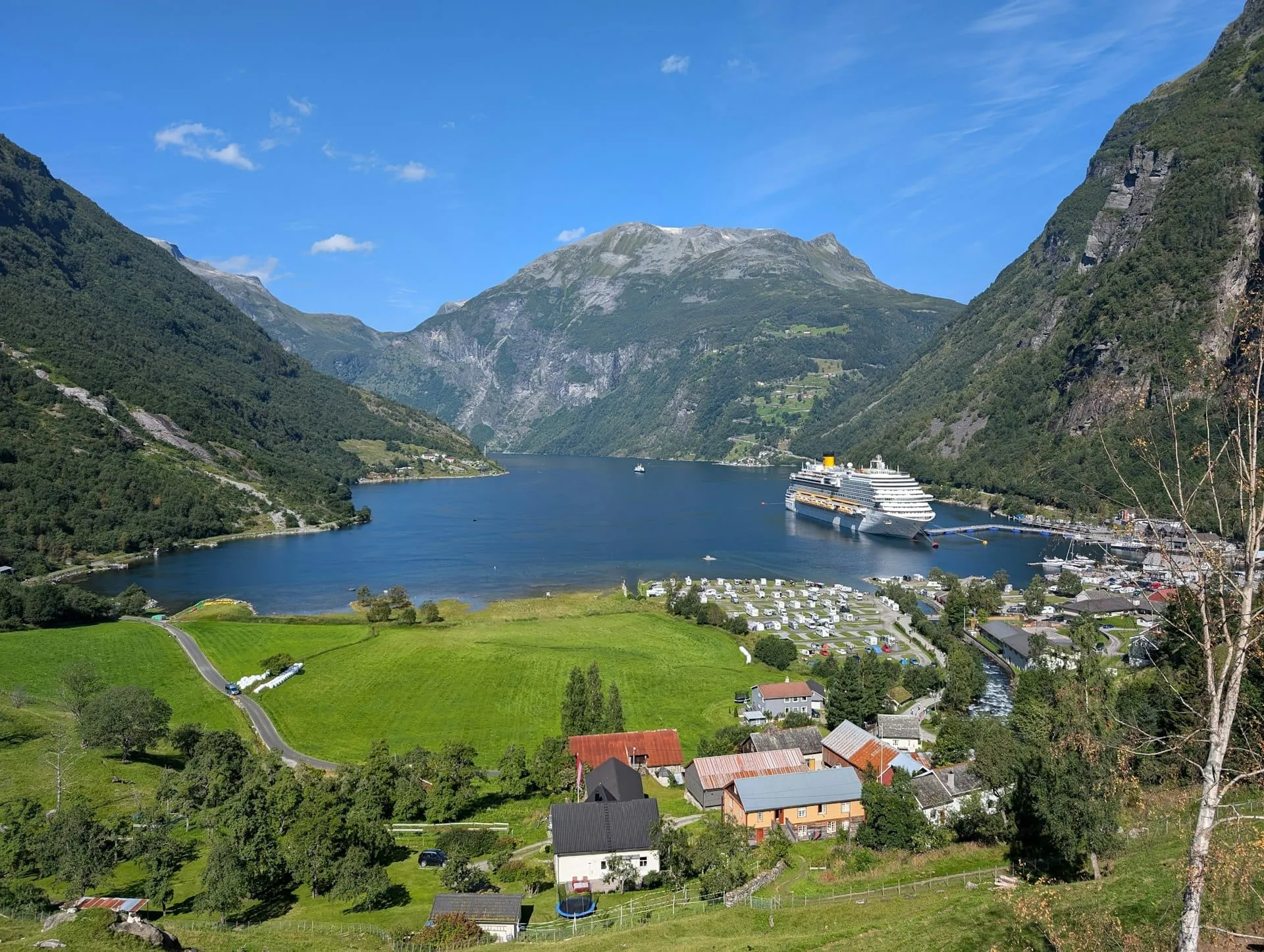
Out of Ålesund on fv60, then the short Eidsdal to Linge ferry across Norddalsfjord. From Eidsdal the Ørnevegen (Eagle Road) hairpins climb over the shoulder and drop you into Geiranger with the fjord filling the windscreen. Stop at the Ørnesvingen platform even if the car park is chaos.
A no-driving day, mostly. We kayaked under the Seven Sisters falls in the morning and drove up the Nibbevegen toll road to Dalsnibba in the evening, when the tour buses had gone and the fjord sat 1,500 m below in gold light.
Back over the Eagle Road and along Norddalsfjord to Valldal, where roadside stalls sell the strawberries the valley is famous for. Then north on the E39 to Vestnes and the big ferry across Romsdalsfjord into Molde, a proper half-hour crossing with a cafe and a view of 200-odd peaks on the skyline.
The finale. Coastal fv664 to the fishing village of Bud, then the Atlanterhavsvegen scenic route: 36 km from Bud to Kårvåg, with the famous seven bridges leaping between islets across Hustadvika bay. Walk the circular path at Eldhusøya, photograph Storseisundbrua from the Askevågen side, and roll into Kristiansund through the undersea tunnel.
Tolls: no barriers, no vignette, just cameras
Norwegian tolls are fully automatic. Every toll point is a gantry with number-plate cameras; you drive through at normal speed and the charge is worked out afterwards. For a foreign-registered car you have two sensible options. The free one: register your plate and a payment card at Epass24, the official billing operator, so charges hit your card at the correct rate and you avoid the plate-lookup fees that get added when the system has to trace an unregistered owner. The keener one: order an AutoPASS toll tag from a toll service provider before you leave, which knocks 20 percent off every crossing and matters if you are covering serious distance.
Ferries: the timetable is the real map
Fjord ferries are not an event, they are the road network. Short crossings like Eidsdal to Linge run continuously in summer; you join the queue, board, and payment happens exactly like a toll: cameras read the plate, no cash, no ticket office. Without any agreement the owner simply gets an invoice by post, plus an invoice fee. With an AutoPASS for ferry prepayment agreement, private cars under 8 m pay NOK 2,200 up front as a balance and every crossing is charged at half price against it, which paid for itself on our trip by about day three. And a detail we loved: the price is per vehicle with driver, and since 2023 passengers travel free on these road ferries, so a full car costs the same as an empty one.
Paying your way in Norway (2026, car under 8 m)
- Vignette
- None. Norway has no vignette system
- Toll payment
- Automatic by plate camera (AutoPASS network)No barriers; billed afterwards
- Foreign plates
- Register free at Epass24Correct rates, no lookup fees
- AutoPASS tag
- 20% off every toll crossingOrder from a toll service provider before travel
- Ferry agreement
- 50% off with AutoPASS for ferry, NOK 2,200 prepaid balance10% with a tag alone
- Ferry passengers
- Free since 2023; you pay per vehicle with driver
Source: AutoPASS official; confirm current rates before you travel
Timing: chase the light, not the midnight sun
The fjord coast sits around 62 to 63 degrees north, below the Arctic Circle, so there is no true midnight sun here. What you get in June and early July is arguably better for a driver: the sun sets late, dips shallowly, and the sky never goes properly dark. We crossed the Atlantic Road at 11 pm in a long amber dusk and had Storseisundbrua almost to ourselves, hours after the day-trip traffic had gone. If you want the empty version of every famous viewpoint, drive it after dinner.
Honest verdict: this is the least stressful driving we have done anywhere in Europe. Speed limits are low, traffic is thin, and the paying side runs itself once your plate is registered. Budget for it, though. Between tolls, ferries and NOK fuel prices, Norway costs more per kilometre than anywhere else we drive, and it is still worth every krone.
Sources & further reading
We check the facts in this guide against official sources and note when we last updated it.
Questions we get asked
Do I need to book the fjord ferries in advance?
Not the road ferries. Crossings like Eidsdal to Linge or Vestnes to Molde work on a drive-up basis: you queue, board the next boat, and cameras handle payment. The exception is sightseeing ferries such as the Geiranger to Hellesylt tourist crossing, which sells timed tickets and does fill up in July, so book that one.
How do tolls work in a foreign or rental car?
Every toll point photographs your plate; nobody stops. In your own foreign-registered car, register the plate with a payment card at Epass24 before the trip so charges are billed correctly without lookup fees, or get an AutoPASS tag for a 20 percent discount per crossing. In a rental, the rental company receives the toll bills and passes them to you, usually with a small admin fee.
Is the Atlantic Road itself a toll road?
No. The Atlanterhavsvegen is toll-free and open all year. It is one of the official Norwegian Scenic Routes, 36 km between Bud and Kårvåg, and the viewpoints and the Eldhusøya walkway are free too. The tolls on this trip come from city rings, tunnels and the ferries, not the famous road itself.
Keep reading
Country guides
Driving in France: tolls, Crit'Air and the good roads
What the autoroute actually costs, why a sticker you order by post decides whether you can enter Paris or Lyon, and the free roads we take instead when the day allows it.
Routes
Crossing the Pyrenees: coast to coast on the mountain roads
Seven days from Hendaye to Cerbère over the Tourmalet, Aubisque and Envalira, dipping into Spain and Andorra - our route, the col heights, and the rules that changed in 2026.
Routes
A week in the Dolomites by car
Seven slow days on the Great Dolomite Road, from Bolzano to Cortina and up to the Tre Cime - plus the booking rules that now decide whether you get up the famous roads at all.